How will humans interact with the world around them?
Scalable Interaction Paradigms for Pervasive Computing Environments — a nationwide research programme funded by the German Research Foundation, dedicated to keeping interaction human as computing dissolves into our homes, public spaces, and control rooms.
Your phone. Your watch. Your car. Your household appliances. Computing is no longer confined to dedicated devices — it is diffusing into the objects and spaces of everyday life, each demanding its own interaction technique of touch, voice, gesture, or gaze. Existing interaction paradigms were not designed for this scale of complexity, and how — or whether — they can adapt to it remains an open research question.
WHAT WE'RE BUILDING
What we're building
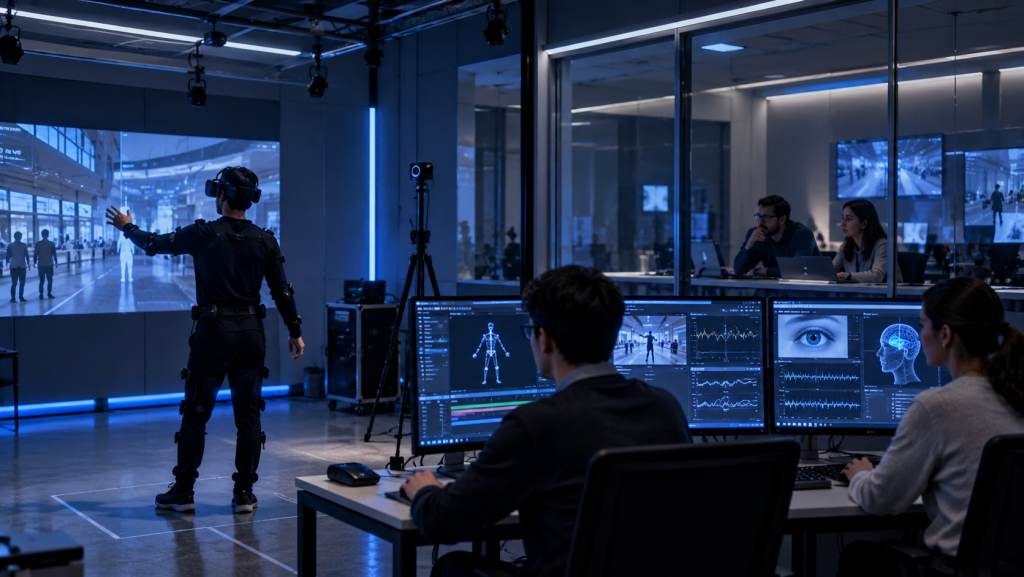
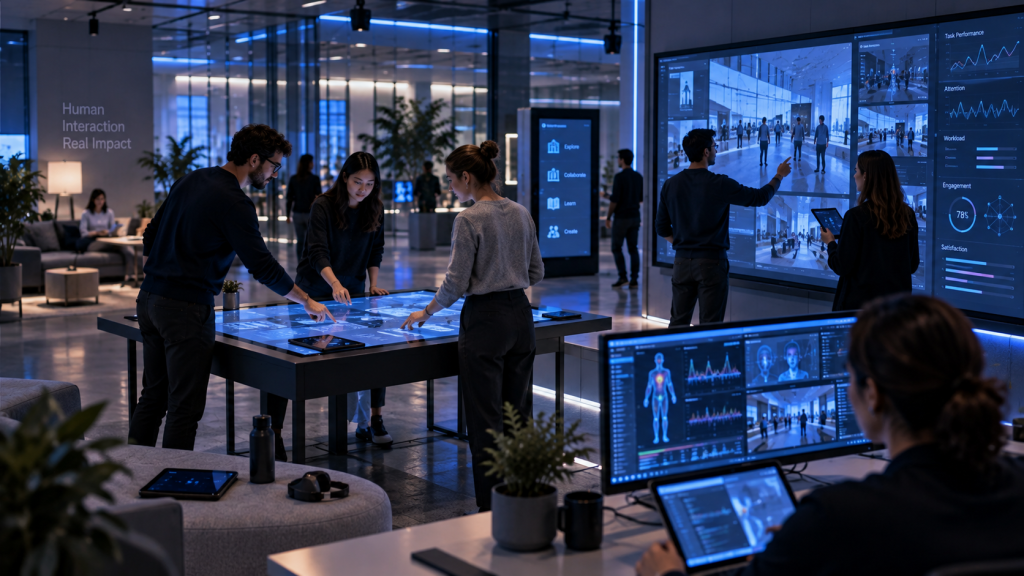
SPP 2199 is a national research initiative funded by the German Research Foundation bringing together Germany’s leading experts in human-computer interaction, psychology, and design to answer these questions — not with another single gadget or gesture, but with paradigms: ways of interacting that scale across devices, across rooms, and across entirely different contexts. We test and ground this work in the places where it matters most: the smart home, the public space, and the control room — from living rooms to ship bridges to intensive care units.
WHY IT MATTERS
Why it matters
This isn’t just a systems problem. It’s a human one. Interaction design today is often driven by market differentiation, not by what people actually need to feel capable, safe, and at ease. Left unaddressed, the proliferation of pervasive computing will mean more friction, more frustration, and more abandoned technology — in the spaces we live, work, and heal in.
Done right, it means the opposite: technology that recedes into the background of everyday life, and interaction that feels less like operating a machine and more like simply living.
“Being at home should not feel like being inside a computer.”