
A nationwide effort to keep interaction human
SPP 2199 is a DFG Priority Programme running 2019–2026, investigating scalable interaction paradigms for pervasive computing environments.
How do we interact with large, complex pervasive computing environments — and which paradigms scale?
“Being at home should not feel like being inside a computer.”
The computers of our everyday environments each offer consistent but subtly different interaction techniques. As computing dissolves into ensembles of devices, almost any action risks becoming “operating a computer.” SPP 2199 investigates interaction paradigms that remain understandable, learnable and transferable as the number and diversity of devices grow.
Design · Methods · Evaluation
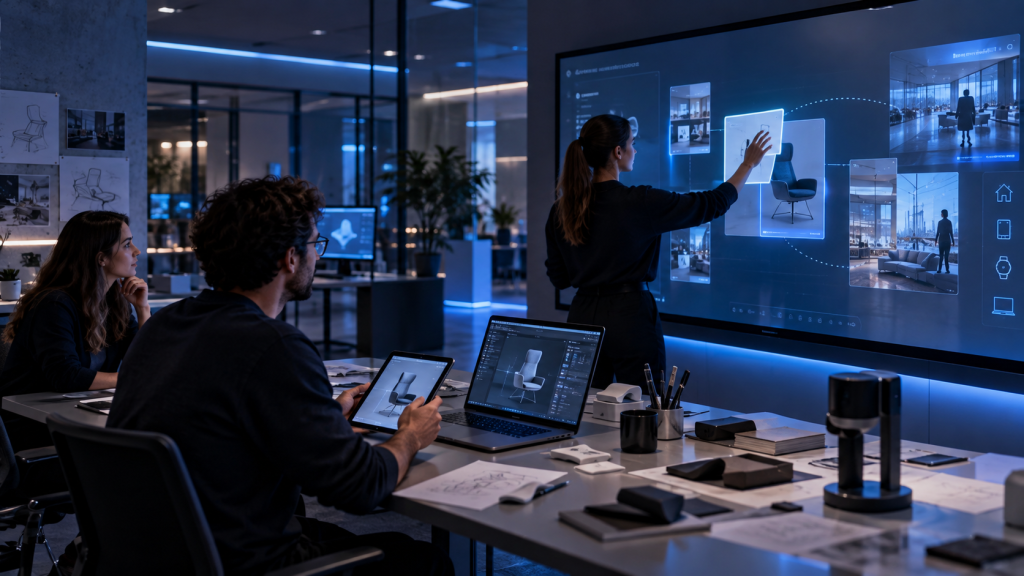
Design
Eliciting, designing, implementing and evaluating new interaction paradigms — grounded in real practices through ethnographic fieldwork, participatory design and stakeholder involvement.
Full description
To make interaction with future computing systems possible, we need a deep understanding of the fundamental interaction paradigms for pervasive environments. Paradigms must be effective and efficient — and their usage obvious, learnable in almost no time. Users must be enabled to transfer interaction knowledge across devices, situations, and environments. Imagine “grasping” a news item from a public display with a gesture and reading it on a tablet on the way home — would the same paradigm hold for grasping information from the x-ray display in an operating theatre to view it on a head-mounted display?
Key questions: How can pervasive systems invite easy, accessible usage across devices, settings and domains — what are the “metaphors” and the “vocabulary” of interacting with large ensembles? How can ensembles reveal their functionality and offer introspection and learnability to all users? How do we design for continuity and consistency across different complex environments? How does the physicality of the space affect the design of interaction paradigms?
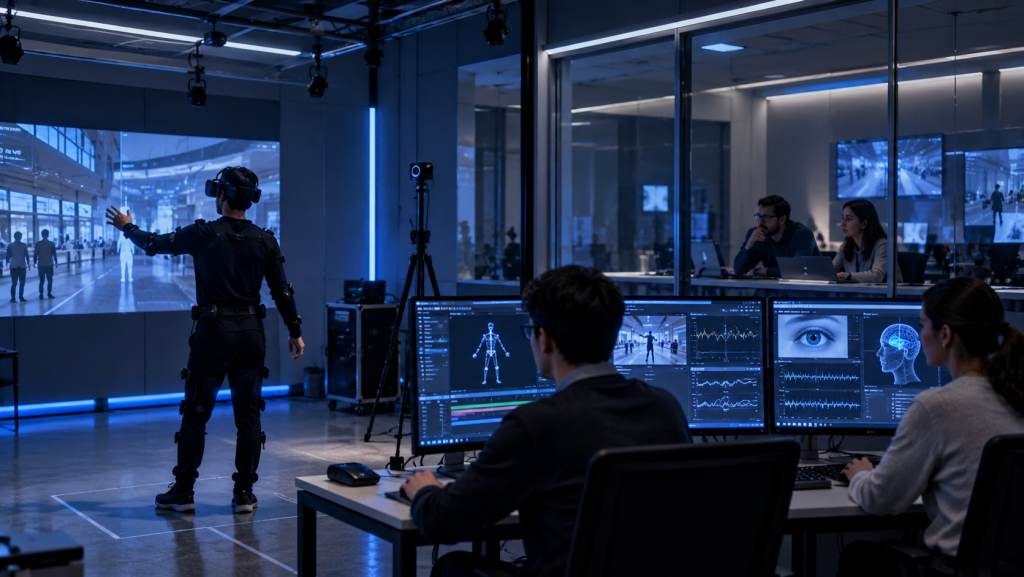
Methods
Developing rigorous, scalable methods for studying and evaluating interaction across diverse devices and domains — research in the large, user simulation, transferable models.
Full description
Current study methods in applied psychology and HCI were developed to evaluate individual devices. In the future we must study virtually unlimited combinations of devices and contexts — usability testing, focus groups, and controlled experiments do not scale with this diversity. Promising directions include “research in the large”, simulating user behavior, and models that transfer findings from one context to another. Unsupervised techniques such as logging or the Experience Sampling Method replace the obtrusive human observer with sensors and in-situ self-reporting.
Key questions: With which methods do we run unsupervised studies in the wild for larger interactive systems? What are the limits of these observations regarding reliability and interpretation? How can immersive VR/AR simulate the “study in the wild” in the lab? Can simulations of pervasive environments evaluate interaction behavior before a prototype is built? How do we employ novel sensor technology (vital signals, EEG, fNIRS, gaze) to increase the explanatory power of unsupervised observation?
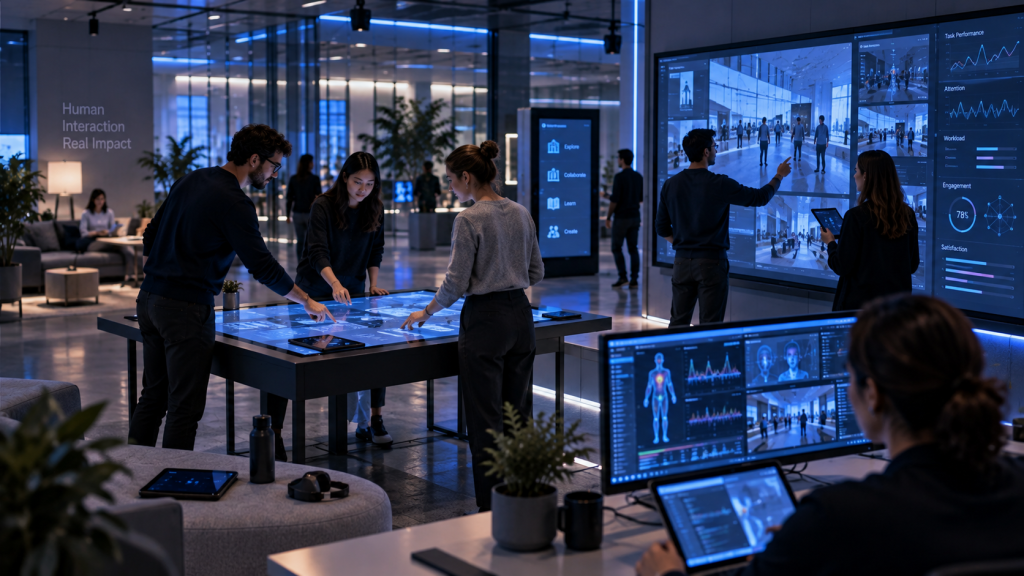
Evaluation
Metrics, criteria and models for evaluating future interactive systems — understanding what good interaction means across pervasive, multi-device, multi-user contexts.
Full description
Effectiveness, efficiency, and satisfaction — the established metrics — are not sufficient. Important dimensions include workload, social acceptability, physiological and psychological fatigue, transferability scores, and effects on group dynamics. Standard instruments such as SUS and NASA TLX must prove they capture the whole user experience of a pervasive computing environment; AttrakDiff or the Comfort Rating Scale remain limited at larger scales. We expect a multimodal sensor-fusion approach integrating behavioral and physiological metrics for post-hoc and real-time assessment.
Key questions: How do we measure effectiveness and efficiency across ensembles of devices? How can unobtrusive measurement enable truly unsupervised assessment in the field? What are suitable metrics from task performance to acceptance and joy of use — including boredom, wandering and attention? What are generic testbeds for comparative analysis?
Three worlds where interaction must scale
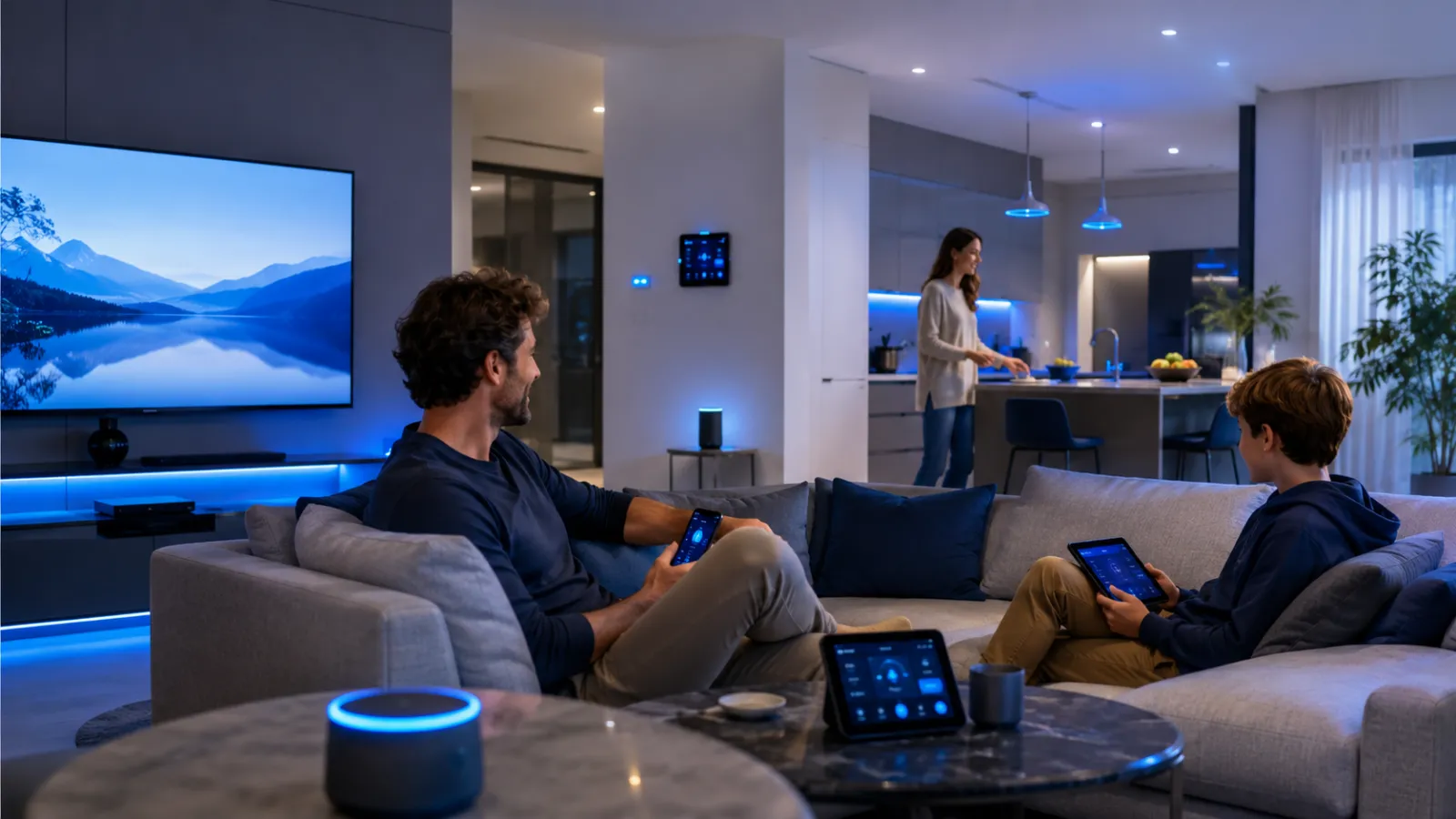
Personal home space
Private, familiar, intimate — entertainment devices, visitors’ devices, and the home itself as a smart space.
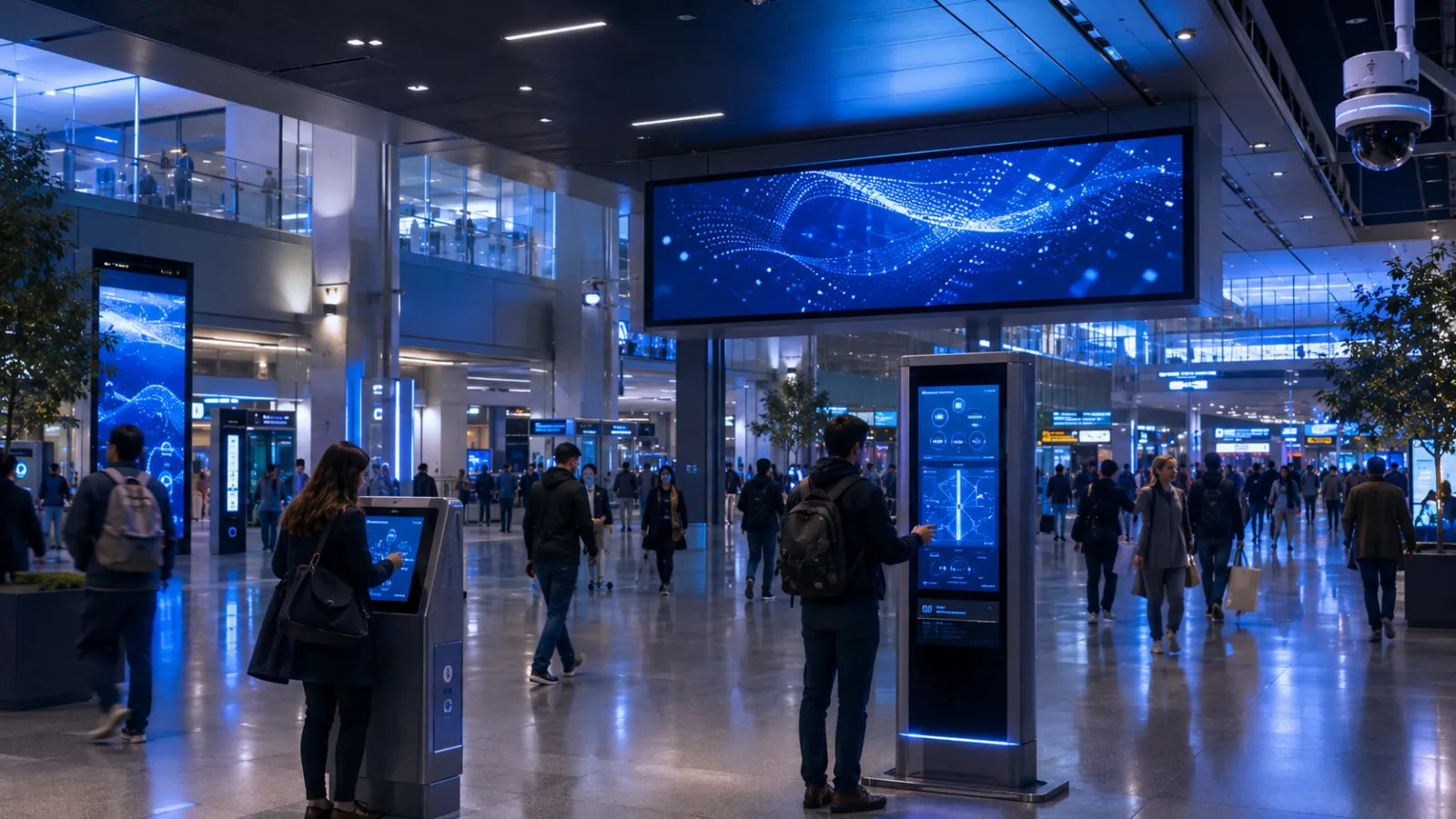
Public smart space
Unfamiliar territory full of displays, cameras and sensors — shared with strangers, indoors and out.

Control Rooms
Ensembles of devices jointly serving one professional, potentially safety-critical task.
Coordinated at the University of Oldenburg
SPP 2199 is funded by the Deutsche Forschungsgemeinschaft (DFG) and coordinated by Prof. Dr. Susanne Boll, Professor for Media Informatics and Multimedia Systems at the University of Oldenburg. The coordination team connects the 19 funded projects, organises shared activities, and runs the Expert Talks lecture series.

Interested in this line of research?
The programme runs until 2026, but the conversation continues. We welcome exchange with researchers, practitioners and partners working on interaction in pervasive computing.